Masonry 16600: The “Plain Yet Hardcore” Carpet Tile for Commercial Offices
A procurement manager’s spec breakdown of Netfloor’s solution-dyed nylon 6 series
First Impression — What the product actually is
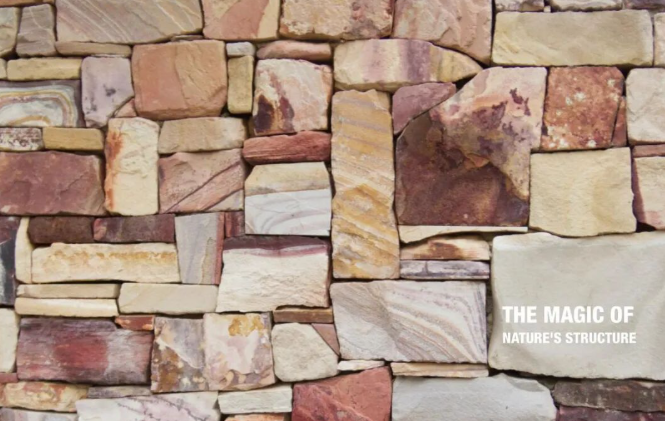
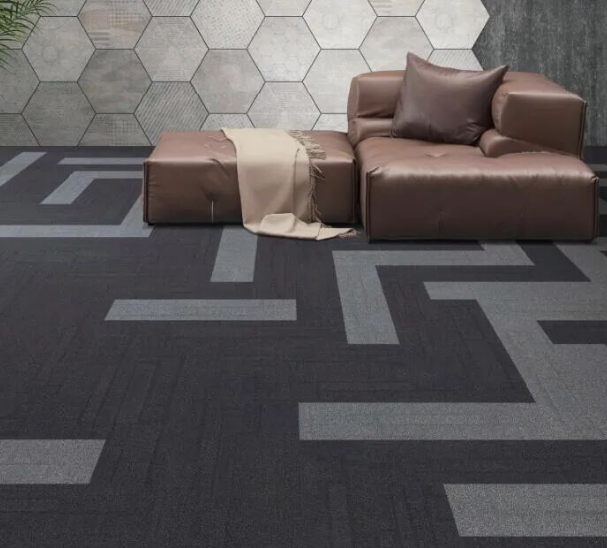
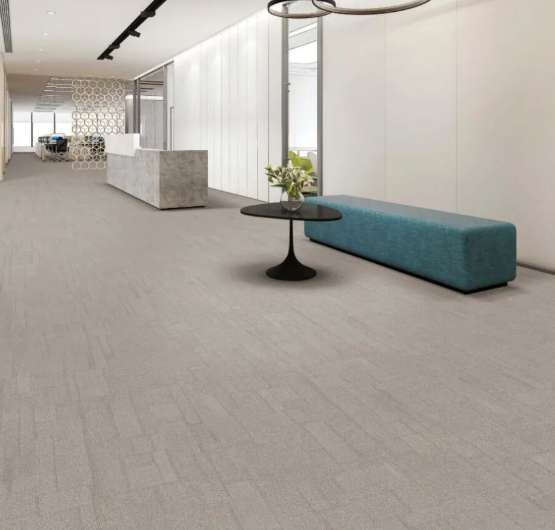
The Masonry 16600 series takes its cue from brickwork: individual tiles, small or large, thick or thin, layered just right. On the floor, the effect is understated — no loud patterns, no forced design statements — but the construction underneath is anything but basic. For a buyer, this is the definition of a safe specification: low visual risk, high performance ceiling.
Core specs at a glance
- Series: Netfloor Masonry 16600
- Construction: Solution-dyed Nylon 6 (原液染色尼龙6)
- Tile size: 500 × 500 mm (standard commercial format)
- Colorway: Black / Grey / Camel — three neutral anchors
- Pattern options: Solid Color A (平毛) / Textured B (高低平毛) — use alone or mix
- Backing: PVC (standard) / bitumen or self-adhesive on request
- Fire rating: B1 (GB 8624) / equivalent to Bfl-s1 per EN 13501-1
- Typical use: Open-plan office, meeting room, corridor, reception zone, co-working space
Why solution-dyed Nylon 6 matters to a buyer
In commercial carpet tile, the fiber choice decides the replacement cycle. Masonry 16600 uses solution-dyed Nylon 6 — the pigment is added before the fiber is spun, not printed or piece-dyed after. The practical consequences:
| Performance point | What it means for your project |
|---|---|
| Colorfastness | Lightfastness ≥ 7 (AATCC 16), suitable for perimeter zones with floor-to-ceiling glass |
| Bleach resistance | Withstands diluted bleach cleaning (up to 10:1) — critical for healthcare-adjacent offices and high-turnover tenancies |
| Abrasion | Nylon 6 offers superior resilience vs. PP; castor chair rating EN 985 ≥ 25,000 cycles |
| Dimensional stability | PVC backing + fiber fusion keeps tile edge curl < 1.5 mm under HVAC cycling |
| Total cost of ownership | Higher first-cost than PP, but 40–60% longer service life in 8–10 year lease fit-outs |
For a procurement manager, the math is simple: Nylon 6 costs more upfront, but the replacement tile order in Year 4 never happens.
Two patterns, one SKU family — the mix-and-match advantage
Masonry 16600 gives you two visual textures within the same color palette:
- Pattern A — Solid / Plain (素色): Level loop, uniform surface. Best for open-plan desks where chair castors dominate and you want a clean, uninterrupted floor plane.
- Pattern B — Textured / Multi-level loop (平毛花型): Slight height variation creates a subtle brick-like shadow. Best for breakout zones, meeting rooms, or corridor borders where you want visual zoning without changing color.
The procurement win: Both patterns share the same dye lot and yarn batch. You can order Pattern A for 80% of the floor and Pattern B for 20% borders — one production run, one container, one color match guaranteed. No cross-factory batch variation. No expensive design-firm custom pattern development. Just two patterns, mixed on site like brickwork.
Color strategy — Black / Grey / Camel
Three colors. No more. This is intentional, not lazy.
| Color | Role in the layout |
|---|---|
| Black | High-traffic zones, entry transitions, IT/server room perimeters — hides soil, reduces cleaning frequency |
| Grey | Open office field color — neutral, pairs with any furniture system, shows less dirt than beige |
| Camel | Accent zones — reception, director’s suite, lounge — adds warmth without committing to bold branding colors |
For a 500 sqm office, a typical allocation is: 60% Grey (field), 25% Black (borders/paths), 15% Camel (feature). This ratio survives 5 years of tenant churn without looking dated.
Installation & logistics notes for the buyer
- MOQ: 100 sqm per color/pattern combination (standard commercial carpet tile MOQ; confirm with Netfloor sales for mix orders)
- Lead time: 15–20 workdays for standard colors; 25–30 days for custom dye lot
- Packing: 20 tiles/carton (5 sqm), max 22 kg/carton — suitable for manual handling in buildings without freight elevators
- Shipping: 20GP holds approx 2,800 sqm (560 cartons); 40HQ holds approx 5,600 sqm
- Labeling: Request bilingual carton (EN + local language) and batch number on every tile wrap for traceability
- Samples: Ask for 30×30 cm loose sample + 1 full tile of each pattern before issuing PO
Where this product fits in your sourcing portfolio
| Buyer type | Why Masonry 16600 works |
|---|---|
| Office fit-out contractor | One SKU family covers field + border + accent; no design risk; Nylon 6 survives castor chairs |
| Corporate facilities manager | Neutral palette survives rebranding; bleach-cleanable; 5+ year spec |
| Government / embassy procurement | B1 fire, low VOC, solution-dyed = no fading under sun; conservative appearance passes review |
| Co-working operator | Mix Pattern A + B to create zones without buying multiple product lines; easy patch repair |
| Wholesaler / distributor | Three colors × two patterns = 6 SKUs to stock; covers 80% of SME office demand |
Bottom line for the procurement manager
Masonry 16600 is not trying to be the cheapest carpet tile on the market. It is trying to be the most defensible specification you can write: Nylon 6 fiber, brick-inspired modular layout, two patterns that mix within one dye lot, three colors that will not look wrong in five years. For a buyer managing multiple projects or a distributor building an import range, that is exactly the kind of product that moves containers without moving the spec sheet.
Next step: Request the 30×30 cm sample set (all 3 colors × 2 patterns = 6 pieces) and the EN 13501-1 fire test report. Compare against your current PP tile stock — the Nylon 6 upgrade pays for itself by Year 3.
If you want, I can also produce a shorter Alibaba/MIIC product-page version of this (title + 5 bullet points + FAQ) or a comparison table pitting Masonry 16600 against a typical PP carpet tile for distributor presentation use.